No Escape
On Movies About Being Stuck Indoors

I don’t know if you’ve ever had a recurring dream about being trapped in a house or building. Sometimes the building will be so big that you can’t find your way out. In other versions of the dream, one room in the house or building will lead to another in an endless quest to find the exit.
It’s been a long time since I had a dream like that, and I think that’s a good sign, as dreams about being trapped in a house or building signify some kind of psychological stress or trauma. It’s a common enough occurrence, and even if you’ve never had a dream like that yourself, you may have heard about it from other people.
Malpertuis
I couldn’t help but notice the theme of being trapped in a building running across several of the movies I’ve seen recently. The first movie was one that I watched through BFI Player called Malpertuis, and it’s a fantastically weird Belgian horror film from 1971. It was directed by Harry Kümel and is based on a gothic horror novel of the same name published in 1943 and written by the Belgian author Jean Ray.
The movie was filmed mainly in Ghent, and I’ve been there recently, so it was interesting to see Ghent in the early 70s, looking a bit rundown and devoid of mass tourism. The premise of the movie is that an aging benefactor (played by Orson Welles of all people!) proclaims that he will divide his fortune between the residents of a mysterious house, but they can only claim their share of the money if they agree to remain in the house for the rest of their lives, never going outdoors again.
After Covid and all the lockdowns we’ve experienced, it feels quite soon to engage with the topic of being confined indoors! As it turns out, the residents of this particular house are manifestations of Greek gods. The film gets weirder and weirder as it goes on, and I’m here for that! I also loved the main actor, Mathieu Carrière, who played the part of a young sailor who had returned to Ghent to find his sister.
The Exterminating Angel
The next movie I watched, also on BFI Player, was called El ángel exterminador, or The Exterminating Angel. It was directed by the Spanish/Mexican surrealist Luis Buñuel, and it premiered at the Cannes Film Festival in 1962. The only other movie I’ve seen by Buñuel was his most famous one, Un Chien Andalou, which he co-wrote with Salvador Dalí in 1929.
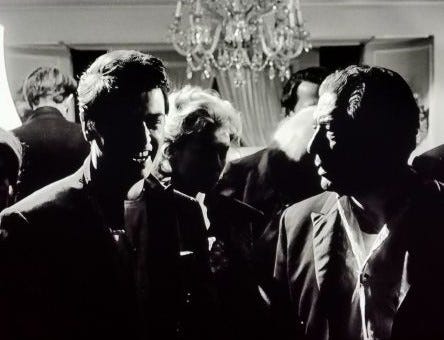
This movie was even weirder than the first one, and I absolutely loved it. It’s about a group of wealthy people in Mexico City who attend a dinner party and find that they can’t leave. There’s no obvious barrier to them leaving, no plot device that explains why they need to stay in the dining room, but every time they try to leave, something prevents that from happening.
I’m still thinking about this movie many weeks later, and that shows how much of an impact the movie had on me. Really extraordinary and well worth watching.
Bell Canto
It reminded me also of the novel Bel Canto by Ann Patchett. Set in South America, the novel tells the story of a group of people who are held hostage at the home of the vice president. If you’ve never read this book, I can highly recommend it. The main character is an American soprano called Roxane Coss, who’d been invited to entertain the guests. The characters are stuck with each other for weeks on end, and the novel plays out all the little dramas that could happen in a hostage situation.
Apparently, Patchett was inspired to write the book by a real-life hostage crisis in Peru in 1996 when fighters from the Túpac Amaru Revolutionary Movement took over the Japanese ambassador’s residence in Lima.
The Diary of Anne Frank
All too often, real life is even more horrific than anything people can imagine. The 1959 film version of The Diary of Anne Frank was broadcast earlier this year on the BBC. I’d never seen the movie before, although I read Anne Frank’s diary when I was a teenager, and I’ve visited the Anne Frank house in Amsterdam.
In my previous post on Lee Miller, I wrote about war and surrealism. It must have seemed surreal for Anne Frank to find herself locked in the annex of a building for more than two years, during that time in her life when she should have been experiencing the world and living life to the full.
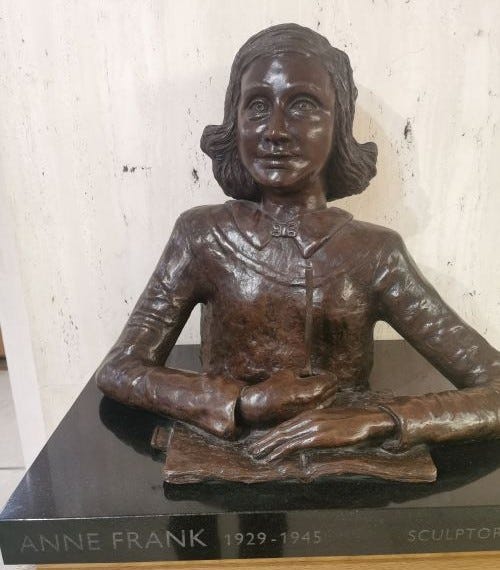
It surprised me to learn that a movie was made so soon after the real-life events. It’s such a tragic story, but inspiring as well, as Anne tried to find joy in the everyday life of her confinement.
I’m sure there are many more books and movies out there that describe being trapped indoors. Reader, let me know what springs to mind!